Home › Learn › Varilux Physio 3.0 Review: Worth the Upgrade?
LENSES
Varilux Physio 3.0 Review: Worth the Upgrade?
Any progressive lens works. The narrower question with a premium design is this: does the extra cost buy something you will notice, or just a longer spec sheet? With Physio 3.0, what Essilor promises is smoother transitions between distances, and you only get that if the lens is fitted correctly.
The optical technology behind Physio 3.0
Physio 3.0 is built on Essilor's W.A.V.E. 2.0 calculation, which Essilor says takes the wearer's changing pupil size and light level into account, rather than a single reference eye.
The lens is then surfaced digitally (freeform) to your prescription. In daily wear, what Essilor's design aims for is that looking from far to near feels less abrupt than with an older-generation progressive.
Binocular Booster: both eyes together
Essilor describes its Binocular Booster as analysing the refraction of both eyes as they move together, so the change between far and near stays smooth for both eyes at once.
Premium coatings and vision protection
On our current price list, Physio 3.0 comes with Essilor's MaxAz coating. Crizal Rock and Crizal Sapphire HR are not on the Physio price list; if you want one of them, ask at the counter and we will tell you whether it can be ordered for your lens and what it costs. Any good anti-reflective coating cuts reflections from oncoming headlights, which is what a driver notices most.
UV protection and blue-violet filtering depend on the lens material and coating; we show you the specification of your exact lens before you order. On blue light specifically, it's worth being precise: the UV protection is well established, while the eye-strain benefit of blue-light filtering isn't.
Advantage: smoother zone transitions
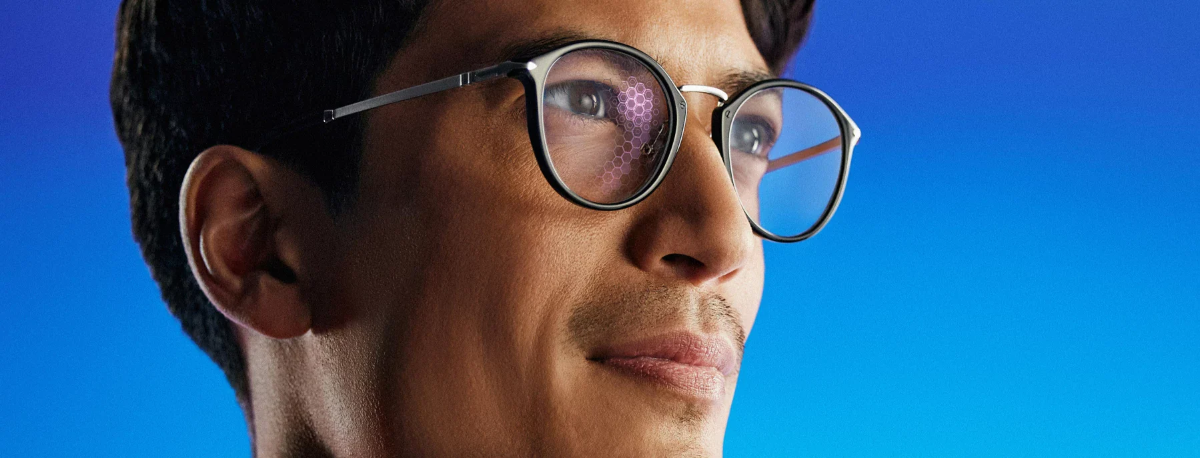
The clearest advantage is the handoff between zones. From a screen an arm's length away, down to a phone, then up to the road ahead, the shift comes with less of the swaying or "swim" sensation that makes people wary of progressives in the first place. Essilor presents smoother transitions than an ordinary progressive as the main feature of Physio 3.0.
Essilor states that its W.A.V.E. 2.0 design takes pupil size and light level into account, to keep vision sharp and comfortable in low light. That matters most on an evening drive.
Who should choose Varilux Physio 3.0

The lens suits people around forty and up with presbyopia who are still working hard and constantly switching tasks, office staff, managers, anyone moving all day between a laptop, paperwork and meetings. That constant switching between distances is what Essilor designs Physio 3.0 around.
It's also worth trying if you've failed to adapt to an ordinary progressive before. If your last pair didn't work out, ask to see the fitting measurements this time, since a premium lens cut wrong is worse than a cheap lens cut right.
Precise fitting and grinding at Manh Long Optical
A lens this technical only performs when fitted and ground accurately to the millimeter. We run a full digital refraction, then take the optical center and fitting height on the exact frame you've chosen, a few millimeters off and the clear zone no longer lines up with where your eyes actually look.
Our technicians advise on lens index, then order directly from the Essilor factory. The lens arrives factory-sealed.
Care and lifespan of a progressive lens
Rinse with clean water or a dedicated solution, then wipe with the microfiber cloth that came with the glasses. Never use a shirt hem or a dry tissue, both are abrasive at exactly the scale the coating lives at, and a scratch in the reading zone means replacing the lens.
Store glasses in a hard case, and avoid leaving them in a motorbike trunk or car dashboard under direct sun. Extreme heat damages the nanoscale coating on the lens surface.
Varilux Physio 3.0 vs an ordinary progressive
A quick comparison between Physio 3.0 and a standard progressive lens.
| Varilux Physio 3.0 | Ordinary progressive | |
|---|---|---|
| Adaptation | A few days to 2 weeks | A few days to 2 weeks |
| Zone transitions | Smoother, according to Essilor | Some swim or blur sensation |
| Suited to | Office work, driving, multitasking | Fewer shifts in visual focus |
Common questions
- How much does Varilux Physio 3.0 cost?
- From 11,780,000₫ a pair of lenses (index 1.5) to 18,980,000₫ (Fit version, 1.67), frame not included; the exact price depends on index. A premium progressive always costs more than a single-vision lens, and the difference pays for Essilor's lens design and an individual fitting. Contact Manh Long Optical, 147A Le Duan, Cua Nam, for an exact quote after a free eye test.
- Is Varilux good for night driving?
- It can help. Essilor states the design keeps vision sharp and comfortable in low light, and an anti-reflective coating cuts reflections from oncoming headlights. An accurate fitting matters as much as the lens: the clear zone has to line up with where you look at the road.
- Why does my old progressive make me dizzy?
- Usually an inaccurate frame fitting. Being off by even a few millimeters on pupil center or fitting height means the clear corridor doesn't line up with where your eyes actually sit. A premium lens cut wrong is worse than a cheap lens cut right. At Manh Long Optical, we remeasure everything before ordering.
- Does Varilux come with a warranty?
- Yes. One-for-one exchange within 1 month if the product is defective.
- I'm over 40 and have never worn progressives. Where should I start?
- Varilux Physio 3.0 is a solid place to start. Essilor designs it around smooth transitions between distances. What matters most is a well-fitted frame and an accurate fitting measurement.
- Is it worth upgrading from an ordinary progressive to Varilux Physio 3.0?
- Worth considering if the change between distances on your current pair feels abrupt, for example looking from the road down to the dashboard or a phone. That is the point Essilor builds this design around. If your current pair is already comfortable, put the money into coating instead of changing the lens design.
- How long does adaptation to Varilux Physio 3.0 take?
- A few days to two weeks for most wearers. If discomfort continues past two weeks, come back in, it's usually a fitting issue rather than the lens itself.
- Can Varilux Physio 3.0 be fitted into rimless frames?
- Yes, with the right index and thickness. Bring the frame you want to Manh Long Optical, 147A Le Duan, Cua Nam, and we'll check beforehand whether it can be edge-cut cleanly.
Sources
- Essilor's Varilux Physio 3.0 price board at the shop (October 2026): source for the W.A.V.E. 2.0, Binocular Booster and smoother-transition descriptions on this page. Varilux Physio extensee is a newer, separate Essilor lens and is not covered here.
Come compare in person
Reading about it only gets you so far. Trying it on tells you more. Come to 147A Le Duan for a refraction test and frame trial, testing, cutting and fine-tuning done in one visit. Whatever you need, we'll tell you; if you don't need it, we'll tell you that too.
Manh Long Optical — 147A Le Duan, Cua Nam, Hanoi
Open daily 8:00 – 21:30
0777 986 999 · WhatsApp · Zalo · mlong.optical@gmail.com · Directions